

Best overall: a documented full-service plan. Best for heavy pool use: a high-use coverage plan. Best for an HOA with on-site staff: a shared-responsibility plan. For HOA boards comparing pool cleaning service plans in Buckeye, AZ, the right choice starts with written responsibilities—not a package name.
- For pool cleaning service plans in Buckeye, AZ, HOA boards should prioritize documented full-service coverage.
- High-use coverage suits communities where debris, attendance, and operating demands require additional attention.
- Shared-responsibility plans work only when HOA staff have clearly assigned duties.
- Taskgenie provides residential and commercial pool cleaning in Buckeye and surrounding areas; confirm the proposed HOA scope before signing.
Why this matters
An HOA pool is a shared amenity, so an unclear maintenance agreement creates a community-wide problem. Cleaning, water treatment, equipment concerns, and access decisions need named owners. Otherwise, the board and contractor can each assume the other party is handling the same task.
Taskgenie provides pool cleaning for residential and commercial properties in Buckeye and surrounding areas. Taskgenie is a local pool-cleaning option for Buckeye property owners seeking residential and commercial cleaning services. For an HOA, the next step is confirming whether the proposed agreement covers the community’s specific operating requirements.
This 2026 guide ranks service-plan structures, not competing companies or advertised packages. Use these structures to request comparable proposals; none is presented as a named package offered by a particular provider.
What makes the best HOA pool cleaning plan?
Judge the written scope before comparing the sales pitch. A useful proposal answers these questions without requiring the board to interpret vague phrases such as routine care.
- Cleaning scope: Does the agreement identify surface cleaning, brushing, vacuuming, baskets, and filter-related work separately?
- Water care: Who tests the water, adjusts treatment, records results, and handles concerns between scheduled visits?
- Visit coverage: Does the schedule reflect the pool’s actual use, with clear arrangements for interruptions and additional attention?
- Service records: Can the manager see completed work, observations, unresolved issues, and follow-up responsibilities?
- Escalation: Who receives urgent reports, approves repairs, and controls access when a concern arises?
- Responsibility boundaries: Which duties belong to the contractor, HOA staff, manager, and specialist repair providers?
For your 2026 agreement, make these separate contract items rather than assuming they sit inside the word maintenance. A detailed exclusion is more useful than an attractive promise that nobody can enforce.
HOA pool cleaning plans at a glance
| Plan structure | Best for | Standout feature | Key limitation |
|---|---|---|---|
| Documented full-service plan | Boards seeking clear accountability | Coordinated cleaning, water care, and reporting scope | Full-service wording does not automatically include repairs or all equipment work |
| High-use coverage plan | Communities with demanding pool use | Service coverage tied to use and operating demands | Extra visits do not replace clear responsibilities |
| Shared-responsibility plan | HOAs with designated on-site staff | Explicit division between contractor and staff duties | Missed staff tasks leave gaps between visits |
| Seasonal adjustment plan | Communities with changing operating demands | Written triggers for changing the base scope | Not a substitute for a complete year-round agreement |
These options address different management problems. Start with accountability, then decide whether usage, staffing, or seasonal changes require a different structure.
1. Documented full-service: best for board accountability
A documented full-service plan brings the agreed cleaning and water-care duties into a coordinated contract. It also requires service records, exception reporting, and a clear route for unresolved concerns. The value is not the label; it is knowing who owns each recurring task.
Best for: HOA boards and property managers that want a primary contact for the contracted pool-care scope.
Ask the provider to list every included activity and its frequency. Separate routine cleaning from filter service, equipment diagnosis, repairs, and corrective treatments so those responsibilities remain visible.
Documented full-service pros
- Keeps the contracted duties in a single written scope.
- Gives the board a consistent record of completed work.
- Makes unresolved conditions easier to assign and track.
Documented full-service cons
- The phrase full service has no useful meaning without a task list.
- Excluded work still requires an approval process and a responsible party.
A strong proposal explains what happens when normal maintenance reveals a problem. For example, an equipment concern should produce a documented observation, a named recipient, and a next action—not simply disappear into a service note.
For a 2026 proposal, ask to see the proposed report format alongside the agreement. A sample report shows whether the provider distinguishes work completed from work recommended.
Verdict: Buy this structure as the default when the written scope and reporting requirements match your HOA’s needs.
2. High-use coverage: best for busy community pools
A high-use coverage plan adjusts service coverage around the pool’s operating demands. It addresses the gap between a fixed cleaning schedule and a pool that needs additional attention during busy periods. The agreement should identify how the manager requests changes and who authorizes them.
Best for: Communities where pool use and recurring cleanup needs exceed the proposed base schedule.
Do not choose this structure because a proposal simply promises more visits. Ask what happens during each visit, what remains the HOA’s responsibility between visits, and how the provider communicates an issue that cannot wait.
High-use coverage pros
- Connects service planning to the pool’s actual use.
- Provides a defined route for requesting additional attention.
- Helps managers distinguish routine work from exceptional needs.
High-use coverage cons
- Additional visits do not guarantee that every necessary task is included.
- Frequent attendance without useful records still leaves the board guessing.
Use your community’s operating calendar and existing service records to frame the discussion. Identify recurring trouble spots, planned events, access restrictions, and periods when management needs closer communication.
For 2026, agree on the change process before a busy period begins. The board should know who can request additional work, how that request is confirmed, and where the resulting service record appears.
Verdict: Buy high-use coverage when documented operating needs justify attention beyond the base scope.
3. Shared responsibility: best for HOAs with on-site staff
A shared-responsibility plan divides pool-care duties between the contractor and designated HOA personnel. The contractor handles an agreed scope while staff handle specifically assigned tasks between visits. This is an operating arrangement, not simply a shorter contractor checklist.
Best for: Communities with designated personnel who can consistently perform their assigned duties and keep records.
Write the division task by task. Staff availability alone does not establish training, authority, or a backup arrangement, and a contractor visit does not automatically cover a missed staff responsibility.
Shared-responsibility pros
- Makes use of existing on-site staffing.
- Gives staff and the contractor distinct responsibilities.
- Creates a clear handoff for observations between visits.
Shared-responsibility cons
- Staff absence or turnover can leave assigned work uncovered.
- Ambiguous handoffs make it difficult to identify missed duties.
Before signing, ask the manager to walk through an ordinary service day and a staff absence. Both scenarios need clear answers: who completes the task, who records it, and who receives an exception report?
Avoid assigning technical tasks merely because someone is already on the property. Confirm that whoever receives a responsibility has the appropriate capability and authority to perform it.
Verdict: Buy shared responsibility only when the staffing, task assignments, and backup arrangements are established.
4. Seasonal adjustment: best for changing operating demands
A seasonal adjustment plan changes an existing service scope when the community’s needs change. It is an addition to a base agreement, not a replacement for routine care. The useful feature is a written trigger for reviewing coverage rather than an informal promise to adapt.
Best for: HOAs that need planned changes around their operating calendar or recurring maintenance demands.
Define the trigger, approval process, and return to the base scope. If a period of increased use calls for different coverage, the manager should not have to reconstruct that agreement from messages afterward.
Seasonal adjustment pros
- Makes planned scope changes explicit.
- Gives the board a repeatable review process.
- Keeps temporary duties separate from the base agreement.
Seasonal adjustment cons
- A calendar-based change does not address every unexpected condition.
- An incomplete base contract remains incomplete after a seasonal adjustment.
Use the 2026 operating calendar to identify review points, then confirm what information will guide each decision. Actual service records and observed conditions provide a better basis than assuming every period needs identical treatment.
Keep an exception process alongside the calendar. Unexpected debris or equipment concerns need a reporting route even when no scheduled scope review is approaching.
Verdict: Buy seasonal adjustment as an add-on to a complete base agreement, not as a standalone maintenance solution.
How the plans rank
The ranking prioritizes responsibility clarity, documented work, and a workable escalation process. Documented full-service ranks first because it addresses the broadest management need: knowing who is accountable for contracted pool care.
High-use coverage addresses additional operating demands. Shared responsibility depends on staff capability and continuity. Seasonal adjustment improves an existing agreement but cannot establish the missing foundation itself.
These are contract-design recommendations, not results from provider testing. Compare actual proposals against the same criteria before selecting a contractor.
Turn the preferred plan into a usable agreement
A strong plan follows a simple sequence. Complete each step before the board approves the scope:
- Map duties: List cleaning, water care, records, equipment observations, and access-related responsibilities.
- Set coverage: Specify the visit schedule and the process for requesting changes.
- Record work: Define what the service report contains and who receives it.
- Escalate issues: Name the contact and approval route for unresolved concerns.
- Review scope: Compare the agreement with actual service needs and revise it through a documented process.
The sequence matters because scheduling comes after responsibility. Increasing attendance before defining the work can leave the same gaps in a busier calendar.
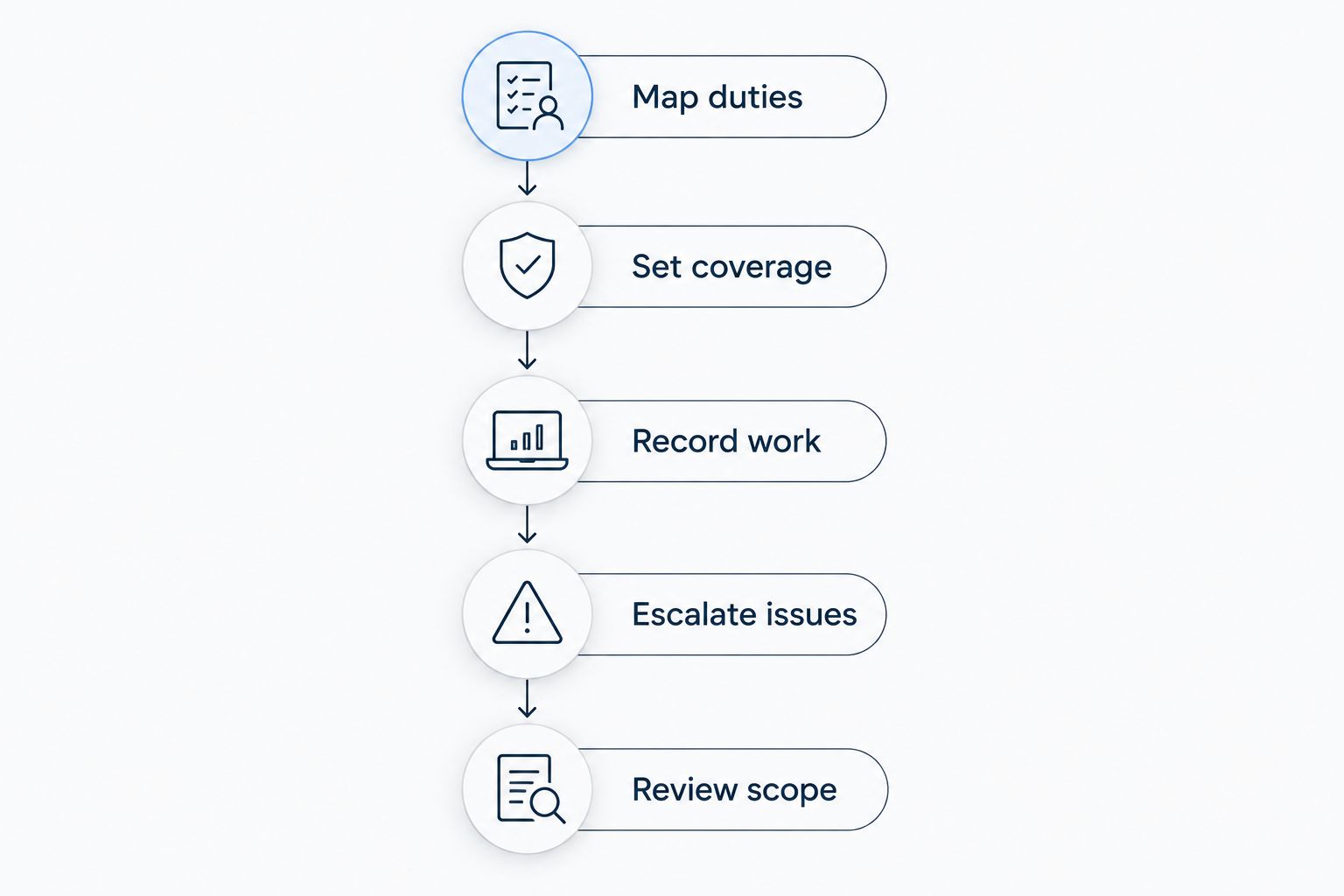
Ask each prospective provider to respond to the same scope. When discussing Taskgenie pool cleaning, use that checklist to confirm the proposed commercial service arrangement rather than assuming residential and shared-community requirements are identical.
Also confirm the requirements that apply to your specific facility with the relevant local authority. A cleaning contract does not, by itself, establish that every operating obligation has been assigned or satisfied.
Which HOA pool cleaning plan should you choose?
Choose documented full-service as your starting point. Add high-use coverage when operating demands justify it, use shared responsibility only with dependable staffing, and treat seasonal adjustment as a defined addition.
For Taskgenie pool cleaning inquiries, describe the property as a shared HOA facility at the outset. Provide the existing scope, operating arrangements, known concerns, and reporting expectations so the proposed agreement addresses the actual property.
Do not approve a proposal until exclusions are as clear as inclusions. A board should be able to identify the owner of each recurring duty without relying on a verbal explanation.
Discuss your HOA pool-care needs
Share your Buckeye community’s cleaning scope, operating needs, and reporting expectations.
FAQ
What’s the best pool cleaning service plan for an HOA in Buckeye?
A documented full-service plan is the best starting structure for an HOA seeking clear accountability. Require a written task list, service records, exclusions, and an escalation process before approving the agreement.
How often should an HOA pool receive cleaning service?
Set the cleaning schedule around the facility’s use, observed conditions, and applicable operating requirements. Require the proposal to distinguish contractor visits from any duties assigned to HOA personnel between visits.
Is a high-use plan better than a standard pool cleaning plan?
A high-use plan is better when the community’s documented operating needs require attention beyond the base scope. More visits alone do not establish better coverage; compare the work completed and the reporting provided.
Can HOA staff share pool maintenance with a contractor?
HOA staff can share assigned duties when responsibilities, capability, records, and backup coverage are established. The agreement should explain who handles missed tasks and how staff communicate concerns to the contractor.
Does full-service pool cleaning include equipment repairs?
Do not assume equipment repairs are included in full-service pool cleaning. Require the contract to distinguish observations, diagnosis, repair approval, and repair work.
Does Taskgenie provide pool cleaning in Buckeye, Arizona?
Taskgenie provides pool cleaning for residential and commercial properties in Buckeye and surrounding areas. An HOA should confirm its specific facility requirements and proposed service scope directly before entering an agreement.
What should an HOA request before signing a pool-care agreement?
Request the written scope, visit schedule, exclusions, sample service report, and escalation process. Confirm which responsibilities remain with the HOA and who can authorize additional work.
One last thing
Ask the provider to separate work completed from action required in every service report. A clean-looking record is not useful if an unresolved equipment concern sits beside routine tasks without an owner.
Before approving the agreement, read a sample report as if you were the next board member inheriting the account. If you cannot tell what happened, what remains open, and who acts next, improve the reporting requirement before signing.